
Five Ways to Get the Best from Your Seasonal Employees and Interns
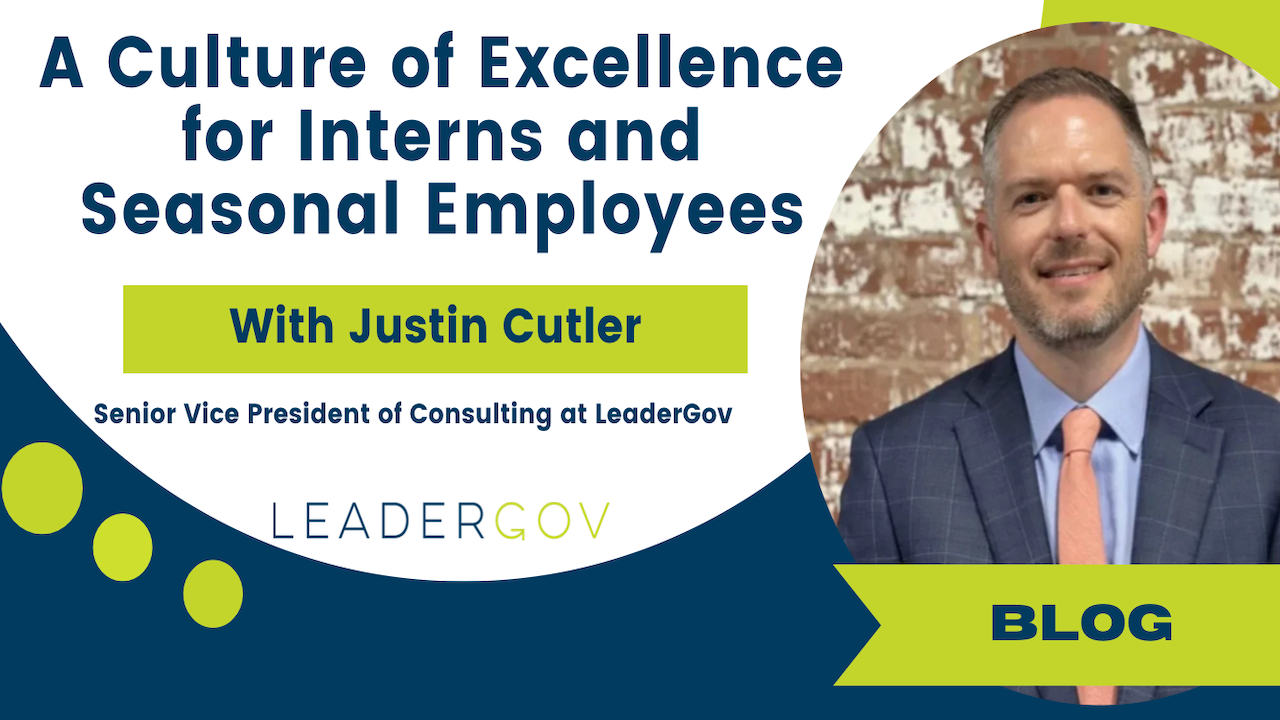
Leadership lessons from LeaderGov's national workshop for local government leaders
Whether it’s for elections, parks and recreation, or office assistants, local governments work with thousands of seasonal employees and interns. They become lifeguards, camp counselors, parks maintenance workers, election staff, public works assistants, office interns, and recreation leaders. While they may only serve for a few months, their impact on your organization—and your community—can be significant.
The question is:
How do you turn a temporary employee into a highly engaged team member?
Recently, LeaderGov hosted a national workshop featuring Justin Cutler, Senior Vice President of Consulting, to answer that question. Justin has spent more than twenty years serving local governments, including leadership roles in Atlanta, Portland, Seattle, and Westminster, Colorado.
Local government leaders from across the country joined the discussion, sharing practical ideas for developing seasonal employees, strengthening organizational culture, and building tomorrow's workforce.
One finding from our pre-session survey stood out.
More than half of participating organizations said they have clearly defined job competencies for hiring. Yet less than half regularly reinforce those competencies during weekly team meetings.
That gap matters.
Hiring well is only the beginning. Employees grow when expectations are reinforced through coaching, feedback, and consistent leadership.
Here are five leadership practices every local government can implement this season.
1. Connect Every Job to a Greater Purpose
Many seasonal employees arrive looking for a summer paycheck.
Great leaders help them discover something bigger.
A lifeguard isn't simply watching a swimming pool—they're protecting lives.
A parks employee isn't just mowing grass—they're creating spaces where families gather and children play.
An election worker isn't only processing paperwork—they're protecting the integrity of democracy.
People are more engaged when they understand why their work matters.
One of Justin's recommendations was especially timely: revisit purpose in the middle of the summer.
By July, energy naturally begins to decline. Work becomes routine. Long days and hot weather take their toll.
That's exactly when supervisors should remind employees of the difference they're making in the lives of residents every day.
Purpose fuels performance.
2. Clarity Creates Confidence
Many seasonal employees are entering the workforce for the first time.
We often assume they understand expectations that seem obvious to experienced staff.
They usually don't.
Justin referenced Brené Brown's well-known quote:
"Clarity is kindness."
Employees perform best when leaders clearly explain:
-
What success looks like
-
Why the task matters
-
How the work should be completed
-
What quality performance looks like
Rather than giving broad directions, break responsibilities into manageable steps and verify understanding before employees begin.
Another recommendation was to clearly identify the core competencies required for each position—whether that's customer service, communication, conflict resolution, childcare experience, technical skills, or professionalism—and reinforce those expectations throughout the season, not just during orientation.
3. Change the Way You Think About Mistakes
Every supervisor has experienced the frustration of watching a new employee make a preventable mistake.
Justin challenged leaders to replace one question with another.
Instead of asking:
"Why did they do that?"
Ask:
"What haven't I taught them yet?"
That small mindset shift changes everything.
Great supervisors assume positive intent.
They recognize that most performance problems are opportunities for additional coaching rather than reasons for criticism.
Learning takes repetition.
Employees rarely master a new process after hearing it once. The best supervisors patiently reinforce expectations until new habits become second nature.
Teaching builds confidence.
Criticism often builds fear.
4. Coach More. Correct Less.
The goal of leadership isn't simply to fix mistakes.
It's to develop people.
Instead of immediately giving answers, effective supervisors ask thoughtful questions that help employees think for themselves.
Questions like:
-
What do you think contributed to this outcome?
-
How would you approach this differently next time?
-
What support would help you succeed?
Those conversations build ownership instead of dependence.
Several workshop participants noted that a seasonal position may be the first meaningful leadership experience a young employee ever has.
The coaching they receive today will shape how they lead—and how they respond to feedback—for years to come.
5. Recognition Is One of the Most Powerful Leadership Tools You Have
Recognition doesn't have to be expensive.
It simply has to be intentional.
Justin described three powerful levels of recognition:
I See You
Show appreciation through simple gestures—a handwritten note, a popsicle on a hot afternoon, lunch for the crew, or a sincere thank-you.
I Hear You
Ask for ideas.
Listen carefully.
Implement good suggestions whenever possible and publicly recognize the people who offered them.
I'm With You
Be present.
Visit worksites.
Walk alongside employees.
Ask questions.
Help when needed.
Employees who believe their leaders genuinely care are more engaged, more productive, and more likely to return next season.
Culture Isn't Built During Orientation
One discussion generated considerable conversation among attendees.
Many organizations introduce their core values during orientation—but rarely mention them again.
Instead, Justin encouraged leaders to spend five to ten minutes during every team meeting discussing one organizational value.
That meeting might happen:
-
Around a conference table
-
In a maintenance shop
-
In a break room
-
Behind a pickup truck before the day's work begins
The location doesn't matter.
The consistency does.
Ask employees:
"What does this value look like in your job?"
Those conversations keep culture alive long after orientation ends.
Great Ideas Shared by Local Government Leaders
One of the best parts of every LeaderGov workshop is learning from one another.
Participants shared several outstanding practices already making a difference in their organizations.
One leader practices reverse mentoring, asking younger seasonal employees what supervisors should understand about their generation and how technology influences the way they communicate and learn.
Another organization hosts an annual appreciation celebration complete with food, games, door prizes, and an open discussion about how to improve the employee experience.
Several participants emphasized treating interns and seasonal employees exactly like full-time staff because many become outstanding future employees.
One participant reflected that a talented seasonal employee eventually inspired him to help her father secure employment after seeing the family's work ethic firsthand.
Those stories serve as reminders that leadership always extends beyond the workplace.
Today's Seasonal Employee Could Be Tomorrow's Department Director
Many city managers, commissioners, directors, and supervisors began their careers as lifeguards, camp counselors, recreation leaders, interns, or maintenance workers.
Seasonal employment isn't simply about filling short-term staffing needs.
It's one of the most important talent pipelines local governments have.
When leaders intentionally connect people to purpose, communicate clear expectations, coach for growth, recognize contributions, and consistently reinforce organizational values, they don't just improve one summer.
They strengthen the future of their entire organization.
That's leadership that lasts long after the season ends.
Continue Building Stronger Teams
LeaderGov partners exclusively with local governments to help organizations build exceptional leaders, strengthen workplace culture, improve strategic execution, and prepare the next generation of public servants.
If your organization would like help with leadership development, strategic planning, culture transformation, retreats, or succession planning, we'd love to start a conversation. Email us at Justin@LeaderGov.com or Bill@LeaderGov.com
